Recommended Reading
  • Grown Up Digital: How the Net Generation is Changing Your World HC
    Grown Up Digital: How the Net Generation is Changing Your World HC
    by Don Tapscott
  • Classroom Blogging: 2nd Edition
    Classroom Blogging: 2nd Edition
    by David Warlick
  • Kidcast: Podcasting in the Classroom
    Kidcast: Podcasting in the Classroom
    by Dan Schmit
  • Kidcast: Creative Podcasting Activities
    Kidcast: Creative Podcasting Activities
    by Dan Schmit
  • The World Is Flat 3.0: A Brief History of the Twenty-first Century
    The World Is Flat 3.0: A Brief History of the Twenty-first Century
    by Thomas L. Friedman
  • Wikinomics: How Mass Collaboration Changes Everything
    Wikinomics: How Mass Collaboration Changes Everything
    by Don Tapscott, Anthony D. Williams
  • Growing Up Digital: The Rise of the Net Generation
    Growing Up Digital: The Rise of the Net Generation
    by Don Tapscott
Gadgets I Use
  • Acer Aspire One AOD250-1165 10.1-Inch Blue Netbook - 3+ Hour Battery Life
    Acer Aspire One AOD250-1165 10.1-Inch Blue Netbook - 3+ Hour Battery Life
    Acer
  • Apple iPod nano 16 GB Black (5th Generation) NEWEST MODEL
    Apple iPod nano 16 GB Black (5th Generation) NEWEST MODEL
    Apple Computer
  • Apple Nike + iPod Sport Kit for iPod nano 1G, 2G, 3G, 4G, iPod touch 1G, 2G, 3G
    Apple Nike + iPod Sport Kit for iPod nano 1G, 2G, 3G, 4G, iPod touch 1G, 2G, 3G
    Apple Computer
  • Switcheasy ThumbTacks Microphone for iPod Nano 4G, Touch 2G - Black
    Switcheasy ThumbTacks Microphone for iPod Nano 4G, Touch 2G - Black
    SwitchEasy
  • Livescribe 2GB Pulse Smartpen (APA-00002)
    Livescribe 2GB Pulse Smartpen (APA-00002)
    Livescribe
  • WACOM CTE450K Black Bamboo Fun Tablet with Pen, Mouse & Graphics Software (Factory Refurbished)
    WACOM CTE450K Black Bamboo Fun Tablet with Pen, Mouse & Graphics Software (Factory Refurbished)
    WACOM
  • Flip Ultra Camcorder 2nd Generation, 120 Minutes (Black)
    Flip Ultra Camcorder 2nd Generation, 120 Minutes (Black)
    Flip Video
  • Clique HD PC / Mac Webcam - Color Black
    Clique HD PC / Mac Webcam - Color Black
    Pixel 3, INC.
  • Blue Microphones Snowflake USB Microphone
    Blue Microphones Snowflake USB Microphone
    Blue Microphones
Blog Roll

Teacherbytes Blog

Entries in education (36)

Wednesday
27Jan2010

The "New" Face of Education?


Okay, I guess I have become an Apple Fan Boy, drinking the Kool-Aid Steve Jobs sold at yesterday's iPad announcement. My wife is almost ready to divorce me because I told her we are getting one of these and there will be no discussion about it. My teenage son will have something new to hate me for because his days of having the coolest and latest technology are numbered. Sometime in March I will be standing in line on what is sure to be a near freezing raining days waiting in line to get an iPad. After that I will be headed for the unemployment line because I missed too much work. Yet, I do feel compelled to get an iPad. This is the type of device that will eventually change face of education as we know it.

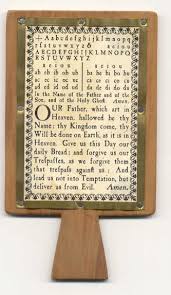
Funny but I do feel a bit of irony that we are actually headed backwards in time. Students used slates such as the one pictured for various class assignments in the 18th, 19th and early 20th Centuries. Colonial students carried a tablet called

a Hornbook. The name of these books comes from the animal horns used to make the learning device. These are the probably the first educational materials to have "apps". The apps might include the alphabet, numbers, vowel and consonant sounds, and the Lord's Prayer. Later tablets became truly interactive because students could write on them using chalk. Students used these devices to learn to read and write for many years until Big Chief notebooks and actual real books became the staple of all classrooms.

So what does the iPad have that could revolutionize education? First off the device is realitively inexpensive. With the $499 starting point it is in the reach of many families. As time goes on this price is sure to come down. Look at what has happened with iPods over the last few years. Other companies, such as Google will also manufacture similar devices which should lower the price. Next  it has a book reader with titles you can purchase from the iTunes Store. During his demonstration, Steve Jobs said textbooks would be coming.

Apple says the device weighs 1.5 pounds. Expect lots of studies to come out for the first time again about how textbook laden backpacks are harming the backs of young people. The iPad can surf the web which means students can access more information than what is in the textbook. Expect an explosion of apps for education to go along with the over 140,000 apps already in the iTunes App Store. Video and audio can be shared to create a true multimedia experience.

While the iPad is not a perfect device, this is a huge step in the right direction. There are some things that should be on future models. For examples, a webcam would be nice for adding to presentations or distance learning. An ability to show the screen on another display such as an interactive whiteboard would be nice too. There are some other tools that could and probably will be thought of as time goes on.

Get ready teachers, students will want to bring them to class. Administrators, teachers will want class sets. Network Administrators, start figuring out how to tie this devices into your networks. Everyone, start thinking of ways for students to use them productively. The educational device of our ancstors is making a comeback.


Monday
11Jan2010

What can Avatar teach us about technology integration?

Photo courtesy of Avatar photo stream on Flickr

Over the holiday break my wife and I saw the 3-D version of Avatar. If you have not seen this version of the movie, go watch it to see how the use of technology gives the audience a better experience. What movie makers can do to enhance films is amazing. At least that was what I thought after watching the movie. After reflection, I have thoughts about Avatar. However, remember I said to go see the movie for the technology, the movie as a story is something different. 

The plot is an old story. A group of natives happen to be sitting on some valuable real estate and won't give it up because of some spiritual connection to the land. An organization, who stands to make lots of money off the land, decides the natives have to go and attempts to use it's technological superiority to evict them. Sounds like Dances with Wolves and other movies of that sort? How about history? North and South American conquest by Europeans. Africa and Asia too. Stories always have some hero who either by chance or design mixes with the native population, learns it's ways, then adopts the native culture. The hero learns of the impending onslaught and leads the natives in a defense of their land and way of life. Usually, the natives win the battle but history says the natives will be crushed in the end.

However, what grade would you give the story itself? While the story was entertaining I thought it was average. All I hear in the press is about the 3-D technology used in the movie. After my reflection I asked myself if the technology glitz mask a mediocre story? Would I purchase this movie when it comes out on DVD or Blue Ray (which I don't have yet)? Would I see this movie a second time in a theater without 3-D? The answer I came up with is probably not. 

After this reflection that I thought of what I always tell teachers about integrating technology, don't get caught up in the glitz. No amount of technology will make up for a poorly written content. Yet, I have seen teachers give high marks to an otherwise average or poor project because it was a blog post, podcast, video, or some other technology because technology was used. Nothing beats good planning and writing, something teachers and now movie critics need to remember.

Enjoy Avatar. See you at the movies!

Thursday
31Dec2009

Teacherbytes on December 31, 2019

Over the past several days there have been many retrospectives of not only the year 2009 but of the 200X decade. There are also predictions of what is the come in 2010 and the next decade. Okay, here is another one for you. Feel free to bookmark this post and bring it up on December 31, 2019 and rub it in my face. How good am I at prognostication? Let’s see, I thought notebooks would be $100 or less by now and the PSP might make a good educational technology tool (I am still holding out on the $100 notebook but Sony has greatly disappointed me). For this exercise I will try to remember how things were in 1999, look at how they are today, and try to see what might pass in the next 10 years.

Classroom Displays

In 1999 Hilton Head Island High School still had chalk boards and I had to breath in chalk dust as I taught Social Studies. If there was any video to be shown it was done on a television with a VCR attached. For me to display anything from a computer it still took a digital to analog signal converter to do it. Not that it mattered, the only thing I could really show was PowerPoint slides. There was not much else to view from the Internet.

Today almost all the classrooms in H.E. McCracken Middle School and in fact, the Beaufort County School District now have either Smart or Promethean Interactive Whiteboards. Each board is connected to the Internet which can now show much more than PowerPoint slides. There are many sources of video and other content to help teachers make learning more meaningful. Students can interact with these boards with classroom response systems.

In 2019 I see classrooms having large thin panel displays similar to OLED Televisions. These displays will have a touch interface much like what has been seen in movies like Minority Reports. Students will also interact with these displays from their seats or homes via handheld slate devices similar to iPhones.

Student materials

In 1999 students loaded up bookbags with heavy textbooks, notebooks, and writing instruments. Maybe they carried calculators or a lucky few had cell phones. The weight of the bookbags are almost a crushing weight. There are fears of potential back problems that may afflict students in later years. Some students may have desktop computers at home and even fewer have access to the Internet.

Today things have not changed too much for students. They still carry heavy bookbags with the same items found in 1999. Almost all students have cellphones but they almost universally banned from schools. They sneak them out in class to interact with each other because their teachers probably don’t let them interact in class and engage in the lesson. These cellphones now have far more computing power than was available on my computer 10 years ago. Students probably now have their own notebook computers but are generally discouraged to bring them to school because of fears of what they may do if allowed to access the Internet or afraid of other liability issues. This equipment almost is never engaged with the classroom interactive displays.

In 2019 students will bring either a powerful handheld device or slate that will have both Internet connectivity and their Math, Literature, and English Language Arts textbooks stored in them. Science and Social Studies textbooks will not be around because students will be researching the information they need for assignments from the Internet. Information is changing so fast teachers and publishers have just about given up publishing textbooks in those two subjects. Their devices will tap into the interactive displays mentioned above for students to display homework or projects or work a problem for other to see while the student is still seated. The teacher can pull up a student’s display onto the main monitor at any time. Audio and maybe video will be recorded for playback and linked to notes students take on their devices.

Media Creation

In 1999 video camcorders were large devices that mostly produced analog images. It was hard and time consuming to edit these videos into anything useful in class. Cameras were mostly film variety but digital was becoming more popular but bulky and what could be done with the pictures? Sometimes they got posted on a posterboard for a project. There was very little space to store both digital video and photographs.

Today, cameras and camcorders are in phones or devices that can fit in the palm of your hand. There are many apps to edit the media created both on a computer or online. Storage is easier thanks to large and cheap hard drives or flash drives. Pictures can be placed into apps such as Photo Story to create entertaining shows. Video can be uploaded to video sharing sites such as YouTube where the content can be embedded into webpages, blogs , or wikis. Teachers can record what they present on their Interactive whiteboards and share it for students to review if they wish.

In 2019, media creation will be blended with computing devices such as cameras and camcorders are with cellphones today. The biggest difference is video will be streamed live. This means students may not have to be physically in a classroom for instruction to go on. There still will be classrooms with teachers and students but students and teachers may be matched up so strengths and weaknesses compliment each other. Media creation may be the most common way assignments are completed both in and out of the classroom.

Assessments

Okay I am not going to bore you except to say assessments have not changed much in the last 10 years. The only exception is some assessments are completed on a computer so test data can be accessed quicker. However, in 2019 No Child Left Behind will be an ugly memory (one can dream). Assessments will be done by special software which can take portfolios of student work and gauge how the student is doing. These assessments will be ongoing constantly giving students, teachers, administrators, and parents feedback and data they need. Not only will items assessed today be assessed in 2019 but collaboration effort and quality of resources used are judged too since they are critical skills in the 21st Century workplace. Gaming will also be used to assess students in some circumstances.

There you have it in one neat package. My review of the last ten years, how things are today, and my predictions for the next 10 years. Please enter your thoughts or predictions in the comments. I think I will place the URL for this post in Google Calendar set for December 31, 2019 so I can think about and see just how I did. Hopefully, all you will have a happy and prosperous New Year. Also, I might as well wish the same for the coming decade. Let’s make a date to meet back 10 years from today to see how well we did.

Happy New Year!

Wednesday
30Dec2009

Books on they way out? Teacherbytes December 30, 2009

I hope everyone had a great holiday but is the Ghost of Christmas Yet to Come pointing its bony finger at the demise of traditional, paper books or students armed with smartphones invading your classroom. Is doom and gloom what some teachers see as more technology comes their way and they can't seem to stop it? No but here are glimpses of what the ghost is pointing to.

Another sign of the apocalypse

Some will see this as another sign the apocalypse is coming but on December 25th Amazon reported more e-books were sold than physical ones. Before you head off to your bunker to wait out the doom you should realize the Kindle was the most gifted item in the history of Amazon. While in the near future traditional books should not worry but if more e-readers are coming, and speculation says 2010 will see a flood of them, then will we have neighborhood bookstores by the end of the coming decade? Yes but they won't look like they do today. Source Engadget and Mashable.

More on Pico Projectors

Pico projectors started coming out in 2008 but have not made much of an impact yet. The biggest reason is you almost need a completely dark room to see a mediocre picture at best. This is starting to change, slowly. RoyalTek announced the RPJ-2000 which is supposed to be the first of five new pico projectors coming out in 2010. The $315 device can project a 65 inch image at 640x40 resolution with 14 lumens of brightness. A very dark room is still needed but it is getting better.  You will also need a $43 converter kit if you have a Mac. Pico projectors can be useful for teachers who are not assigned to one classroom or does not have access to a regular projector or does not want to lug around a projector. Source: Engadget

What can you do with a pico projectors?

Other than the obvious Logic Wireless has the 150LGW Projector Phone. This little device sold at Skymall (the catalog you browse waiting for your plane to take off) will set you back $499. The projector is said to project an image up to 64 inches but no word on resolution or brightness. The phone is built to be a portable office with dual SIM card slots so you can use it on different carriers and Quad Band GSM. Software for the Symbian-based phone includes a Word, Excel, PowerPoint, and PDF viewer. This is the second phone to be bundled with a projector. The other phone is the LG eXpo which will offers a projector as an option. Cell phone use in classrooms is coming, just think about the first time a student pulls out one of these to show their project. Source: Engadget

Get it while it's hot!

Apple dropped the price of its entry-level MacBook to $728 for educators and students. It is not known how long this price drop will last so if you still have some Christmas cash left and are wanting to dip into the Mac waters this might be your chance. Source Engadget

Verizon sees slates everywhere

Last week OLPC announced they are working on a thin tablet PC for the education market. Almost everyone is speculating on the rumored Apple slate computer which is supposed to be announced early next year. Well Verizon apparently wants to take advantage what many think will be next computer craze and make sure you can access the Verizon network on slates like you can on some netbooks. Source: CNET

Easy Shot Videos

Concord Keystone is going to announce the Easy Shot Clip camcorder at CES next month. Specs on the $70 camcorder is it can shoot 640x480 at 30 frames per second. The 2GB memory will allow for up to 2 hours of video. All this will be in a 2-inch package you can hang around your neck or mount in various places. This could be useful to have to quickly shoot video of class activities that may be unplanned. Source: Engadget

Wednesday
06May2009

A glimpse of our future

One of the best lines in the movie Broadcast News veteran reporter Aaron Altman, played by Albert Brooks, was at home prompting a rookie reporter over the phone during a special report. In the midst of this Altman observes "I say it here, it comes out there" as his suggestions are broadcast verbatim. I had a moment almost like that except Twitter was the median instead of a telephone.

Last night a thunderstorm hit Bluffton. In the midst of the storm the power went out in my house. About the only thing working was my Black Berry. I went to Tiny Twitter and Tweeted what was happening with the weather and what happened with the power. Not too long after this Tweet I got a message from a friend on Twitter saying she heard about me on the news again. Apparently, WSAV anchor Holly Bounds or producer Gabe Travers saw my tweet and passed it on to the meteorologist on the 6:00 news who relayed my plight to the Lowcountry and Coastal Empire. Since I am sitting in a house with no power I miss the whole thing. The power is restored in time for My Lowcountry 3. I had twittered my power has been restored. As I watch the show, guess what? The viewers of the local news show are assured that my power is back on.

As I tweeted here and saw it come out there (WSAV), I had a greater understanding of how disconcerting Aaron Altman felt. Except Altman was a professional journalist and I am an educator. Then it struck me, I and people like me are the future of the news media. Newspapers across the country are going out of business. Reporters are losing their jobs faster than auto workers. The news media industry is at the point it needs to change or die. The change? Find a cadre of citizen journalists (knowing or unknowing) and let them break the news. The professional journalists will then come behind and develop the story.

How better to do this than to use social networks such as Facebook or information networks such as Twitter. Follow what people are observing and see what could become a story. Major networks such as CNN and Fox News are inviting people to submit story ideas. Local outlets are doing the same thing. My Lowcountry 3 always has a question of the day on Facebook and relays the responses each night. This binds shows with their audiences which creates a loyal fan base while saving some money for the organization. Nothing wrong with that as long as both parties agree to the relationship. I did not mind my power outage plight being shared so no harm no foul.

Another example of how journalists are adapting to the new media is how Island Packet Sports Reporter Justin Jarrett uses Twitter. Justin used to cover my soccer team during my coaching days so we became as friendly as a coach and reporter can become. He did a in depth report on what area athletes were posting on social network sites such as MySpace so he understands Web 2.0 Out of respect for his talent, professionalism, and past history I followed him as soon as I saw he was on Twitter. He has not disappointed me. Not only does Justin give you short updates of the events he covers but he brings his personality into his tweets. He comments on just about anything with an insight you don't get by reading his stories alone. Justin's tweets make me want to read his stories in the paper because I will get a better understanding of what he is writing about. Another thing Justin does is he interacts with readers in a way you rarely see. This can only be done through apps like Twitter or Facebook.

Will the news media come out of this recession the same way it entered it? The answer is no. However, the news media will not die but must and will change and adapt to the new conditions. Holly Bounds, Gabe Travers, and Justin Jarrett are showing what the news media will look like in the near future. The lesson for educators? Journalism, like education, has been plodding along with its traditions and attitude of this is they way it is always done. Many educators have this same attitude. Education will change too. The big difference will be the pace of change between the two professions. Watching journalism change can teach us how to handle the inevitable change to come.